Before You Buy a Camping Power Station: 7 Specs That Actually Matter
Introduction: Understanding Power Station Specifications
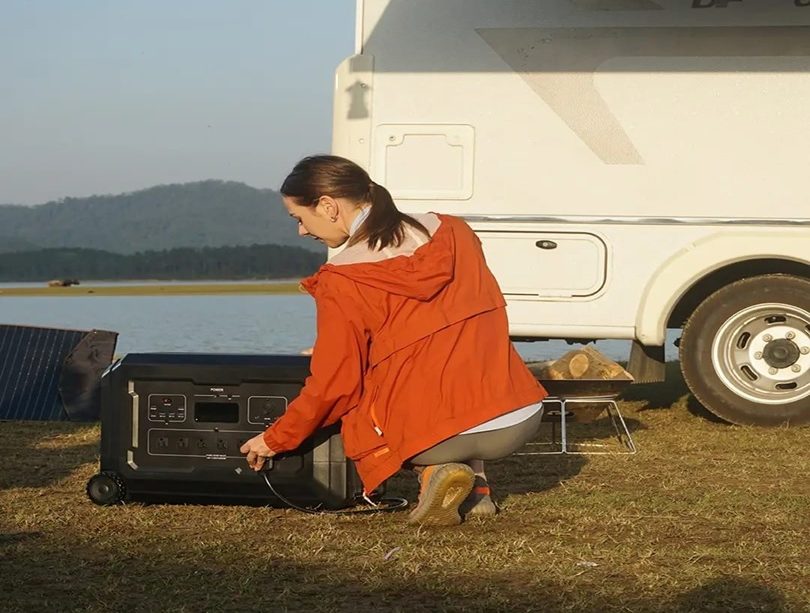
Buying a power station is a serious commitment, so it’s vital to be well-informed on the most essential technical specifications that will affect how useful it will be to you. Since there are so many different ones on the market today, all boasting impressive specs, it’s easy to get lost in the jargon and smoke and mirrors of marketing speak. However, you should know what the most important factors are to ensure you’re getting the best value and the most suitable power station for your camping needs. We’ve compiled a list of seven crucial specs to consider when buying a power station in this complete guide.
Spec 1: Battery Capacity (Watt-Hours)
Battery capacity is the most essential characteristic in choosing the Camping Power Station, as it determines how much energy your power station can deliver. Basically, it means the total stored electricity that a battery will give you. The size of the battery should be calculated based on how many hours per day you want it to work. For example, a 500Wh battery can power your 100 W power station for 5 hours or 50 W one for 10 hours. So for such types of activities as weekend camping and moderate energy consumption, 500 to 1000Wh is an appropriate choice. It will provide enough electricity to charge your gear, such as laptops, smartphones, and camping lights. But if you want to use more power-hungry devices like coffee makers, air compressors, and heaters, you will need a more powerful battery (starting from 1500Wh).
Spec 2: Continuous Power Output (Watts)
The continuous power in watts means how much electricity the station can provide constantly without any fluctuations and spikes. This criterion is different from the peak power because it shows the power source’s maximum potential. When going camping, there are specific watts per device that you will need, on average, from 500 to 2000 watts. A kettle, for instance, will require about 1500 watts, but a charger for a laptop can reach as low as 65 or 100 watts. Therefore, it is critical to pay attention to the former indication and make sure that the desired power station’s continuous power will suit your devices’ needs. Otherwise, you may get a station that will not allow you to use your equipment if its wattage is too high, and it will turn off automatically when you try to use it.
Spec 3: Number and Types of Output Ports
The type and number of output ports of the power station determine what devices you can power at the same time. You will typically find AC outlets (120V in North America), USB-A ports (for older devices), USB-C ports (for modern smartphones and tablets), and occasionally DC ports (for some specific devices). A good camping power station will have multiple types of ports so that you can charge more devices at the same time, without having to use adapters or a chain of USB hubs. For example, you can charge your phone and tablet with a USB-C port while your laptop is charging with the AC outlet. Check for power stations with two AC outlets and multiple USB-A, USB-C (or other) ports.
Spec 4: Charging Speed and Input Options
The amount of time it takes for your power station to charge up in between uses can be an often overlooked but crucial factor. When shopping around for camping power stations, make sure to pay attention to the charging inputs. The SOUOP Power Station is one of those power stations that have taken a lot of care in providing multiple ways to charge the power station up. SOUOP is the brand name for Shenzhen Kerui Power Storage Co., Ltd, which is a company specialised in developing and manufacturing portable power storage products, providing home backup power, renovation and construction, and RV camping power products. The company has profound technical expertise and product development capabilities in distributed energy storage products and solar generators. As for the portable power stations offered by the company, they also have multiple charging options such as charging from AC power, solar, and also vehicles. In other words, there are many electricity sources that you can use to charge up your power station, this is especially useful for camping in widely varying conditions.
Spec 5: Product Range and Application Versatility
Apart from personal preferences, it is also essential to focus on the philosophy of the manufacturer. For example, companies that make power stations usually offer a wide variety of devices. Such firms as SOUOP present a large selection of products that are suitable for outdoor and emergency uses, industrial needs, home backup, camping experiences, RV, and even more. In this case, the more the company offers, the more attention they pay to different customers’ needs. When buying a power station, it is also worth paying attention to firms that offer various products for emergency backup. Such companies have extensive experience in the sphere and can provide you with the best solution for camping trips. Moreover, a company that also supplies products for the RV market knows the demands of this industry well and can fulfill your requirements as well.
Spec 6: Weight and Portability Considerations
While battery capacity and power capacity are obviously important, the weight and portability of your power station are also very important aspects of your camping experience. That 3000Wh power station you were eyeing may seem great on paper, but if it’s going to be too large and unwieldy for your camping site, it’s going to cause more problems than it solves. Most camping experts suggest that you stick with a power station that weighs somewhere between 15-30 pounds for your weekend camping adventure. In addition to how much you can carry and how much space you have in your vehicle, you should also take into account how far you’re going to have to move your power station from and to your campsite. Power stations that weigh under 20 pounds are best for backpacking, while those that weigh 25-35 pounds are great for car camping.
Spec 7: Charging Efficiency and Temperature Performance
The last but not least specification, which is worth considering is the charging efficiency and performance of the power station in different temperatures. The best power stations are able to work in a wide temperature range from -20C to 60C, although their efficiency may be affected by extremely low temperatures due to the nature of batteries. Take a close look at the instruction manual and try to find information about temperature range. Secondly, it is worth paying attention to the charging efficiency stated in percentage. It is a percentage of electricity, which will be stored in the battery during the charging process. Good power stations have a charging efficiency from 85 to 95% so that 85% of electricity on average will be stored in the battery and only 15% will be lost as waste heat during the process. Therefore, it is essential to check this specification carefully especially in case you are planning to charge the power station with a solar panel as much as possible in order to benefit from every single percentage of electricity stored.
Making Your Final Decision
Before buying a camping power station, it is necessary to draw up a specification list and make sure that the desired technical characteristics are present on the chosen device. First, you need to write down which devices you will be using during your trips and what power they require. Then, based on this information, count how many watt-hours you need for one day of camping, and multiply this indicator by the number of days of your trip. After you have done all calculations, you can start looking for a camping power station that will meet all of your requirements. It is also worth considering several manufacturers and comparing the characteristics of different power stations rather than just looking at the characteristics of one. In this case, it is also important to consider not only the technical characteristics but also the company’s reputation and warranty conditions. Thus, if you pay attention to these 7 indicators when choosing a camping power station, you will take advantage of many years of exploring the wilderness