How Solo Adventure Travel Helps You Discover New Places and Build Confidence
Most vacations are an ongoing exercise in social negotiation. Traveling with companions involves reconciling conflicting itineraries, synchronizing morning routines, compromising on dinner options, and balancing differing thresholds for physical fatigue. While group travel has its clear rewards, it also places a protective cushion between the traveler and the destination.
Solo adventure travel strips away that comfortable buffer. It places an individual squarely against unfamiliar terrain, with no companion to dilute the immediacy of the setting or take over the logistical steering wheel. While stepping onto a remote mountain trail or navigating a bustling foreign transit hub alone initially triggers apprehension, that exact tension serves as a catalyst for personal growth. By removing familiar safety nets, solo exploration turns the world into a living classroom where discovering uncharted landscapes goes hand in hand with building profound, enduring self-confidence.
Unfiltered Discovery: Experiencing Places on Your Own Terms
Traveling with an entourage naturally turns attention inward. Groups converse in their shared native language, default to familiar food choices when energy runs low, and adhere to predictable sightseeing checklists. In contrast, traveling alone directs your awareness outward toward the surrounding environment.
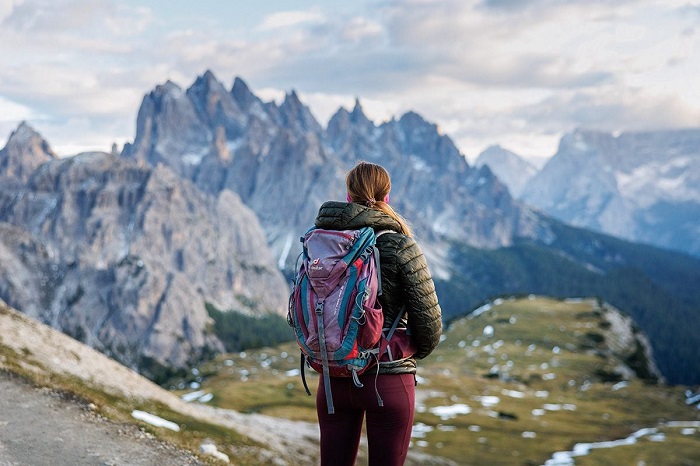
Without continuous conversation to occupy your thoughts, your senses sharpen. You notice the architectural subtleties of a centuries-old village street, the shifting wind patterns across an alpine ridge, and the cadence of daily life in a neighborhood market. Exploration becomes an active dialogue between you and the destination.
More importantly, independent travel unlocks the power of complete schedule autonomy. If an unmarked footpath invites an unexpected afternoon detour, or a conversation with a local artisan leads to a quiet coastal cove omitted from standard guidebooks, you can pivot your entire day without guilt or committee approval. This fluidity enables authentic, serendipitous discovery. You experience a location as it actually exists, rather than viewing a curated version through the lens of group consensus.
The Architecture of Self-Reliance and Problem-Solving
Confidence is rarely built through positive affirmations; it is earned by confronting practical challenges and overcoming them through your own agency. Solo adventure provides an accelerated education in applied resilience.
When travel plans inevitably unravel—whether you miss the last regional bus into a mountain valley, find your path blocked by a swollen creek, or navigate a dialect where you understand neither the words nor the script—there is no one else to manage the crisis. You cannot look to someone else to take charge. You must pause, regulate your emotional response, assess available resources, and take decisive action.
Every logistical hurdle resolved on the road functions as a psychological milestone. Successfully finding your way through a complicated train terminus, replacing torn gear with the help of a hardware clerk who speaks no English, or setting up a tent in the driving rain creates undeniable evidence of your competence.
Psychologists describe this phenomenon as expanding your locus of control and reinforcing self-efficacy—the grounded certainty that your actions can influence outcomes and resolve difficulty. When you return home, everyday professional conflicts and personal uncertainties feel far less daunting because you have already proven your ability to handle chaos with calm composure.
Breaking Decision Paralysis and Rebuilding Personal Instinct
Modern urban life is saturated with external decision support. We rely on aggregate review ratings, crowdsourced maps, and shared calendars to pre-vet our choices, effectively outsourcing our intuition to digital algorithms. Solo adventure forces an immediate return to internal judgment.
Throughout an independent journey, every choice rests entirely on your shoulders:
-
Deciding when to push forward along an arduous trail and when to turn back due to deteriorating weather
-
Choosing which side street feels safe and welcoming in an unfamiliar metropolis
-
Gauging the reliability of transit advice offered by a stranger at a ferry terminal
-
Reading your own physiological reserves to balance exertion with essential recovery
Initially, this responsibility can produce a momentary wave of decision fatigue. Yet, as the journey progresses, hesitation gives way to trust in your own instincts. You learn to interpret subtle environmental cues, listen to internal warning signs, and make decisions without needing second opinions. This heightened attunement sharpens your judgment, instilling a level of self-trust that carries over directly into high-stakes career decisions and major life transitions.
The Social Paradox of the Independent Explorer
One of the greatest hesitations prospective solo travelers harbor is the fear of crippling loneliness. The prospect of eating meals alone or spending quiet evenings without familiar company can feel isolating from afar. Yet, experienced adventurers understand a core reality of the road: traveling alone makes you vastly more approachable.
A couple or an established circle of friends projects a closed social perimeter. Passersby, hospitality staff, and fellow travelers naturally avoid intruding on an existing dynamic. A solo traveler, by contrast, presents an open invitation for genuine interaction.
Locals are significantly more inclined to strike up spontaneous conversations, share regional folklore, invite you to a family table, or offer insider recommendations on the best regional paths. Furthermore, solo adventure travel embeds you within a global network of fellow explorers. In trail huts, backcountry camps, and public transit lounges, independent wanderers naturally connect over shared maps and trail stories. Because everyone has stepped outside their regular social safety nets, conversations quickly bypass shallow pleasantries, leading to deep, memorable connections that often outlast the trip itself.
Carrying the Lessons of the Frontier Back Home
The transformative impact of solo adventure travel does not conclude when you unpack your rucksack and return your passport to the drawer. The greatest value is the lasting shift in how you perceive your place in the wider world.
Stepping into the unknown alone dismantles the arbitrary boundaries we place on our own potential. You discover that fear is rarely an indicator to turn back; it is simply a physiological marker of unfamiliarity. Having walked solitary ridges, communicated across language barriers, and navigated unfamiliar territory without a script, you return to daily life with a quiet, grounded assurance.
You stop waiting for external conditions to be perfect, and you stop waiting for companions to be available before pursuing ambitious goals. Whether launching a new venture, exploring a challenging hobby, or managing personal disruption, you navigate the path forward with the steady confidence of someone who has already explored the unfamiliar and found their footing.